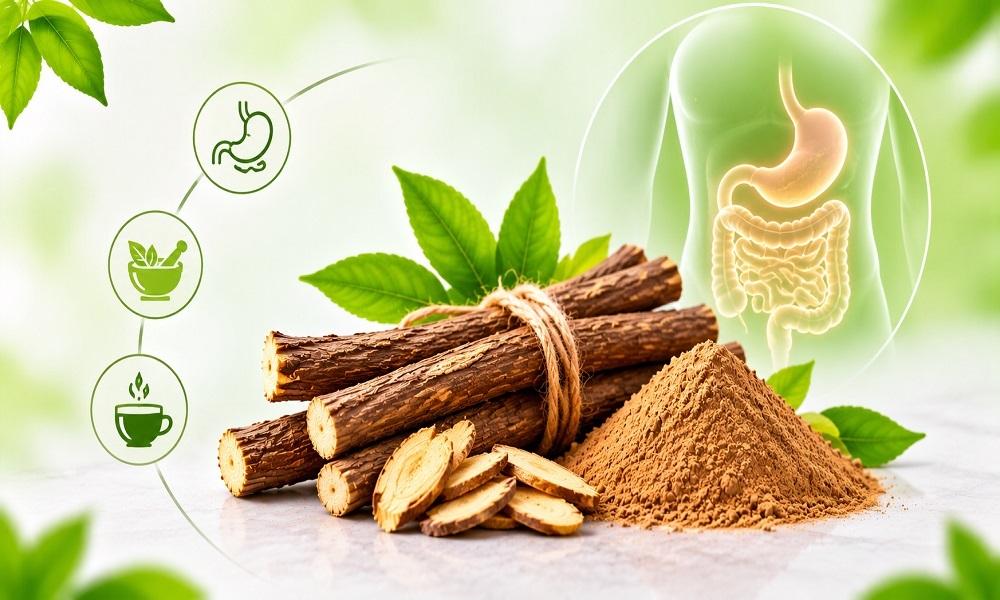
Liquorice has been used as an herbal medicine for centuries, predominantly for coughs and colds or milder digestion. Liquorice root extract as an ingredient is a popular start of digestive herbal teas & supplements. Mild tasting, rich in plant activities and highly adaptable. This overall blog is about working with liquorice in formulas, brands to look for and how to use.
What Is Liquorice Root Extract?
Have you shopped at a European or Asian marketplace? You may have come across a popular Chinese medicine – liquorice root extract (from a plant called Glycyrrhiza glabra). In the marketplace, the roots are pressed, dried, and concentrated to make sure to extract as much of the bioactive compounds as possible. The main ones are:
- Glycyrrhizin: the compound that gives liquorice its natural sweetness
- Flavonoids: plant compounds studied for their soothing and antioxidant qualities
- Glabridin: another compound valued in wellness research
Two forms are common in the market. Standard extract contains glycyrrhizin. Deglycyrrhizinated Liquorice (DGL) has most of the glycyrrhizin removed.
Common Digestive Uses
In traditional medicine, the following benefits to the digestive system are attributed to extracts of liquorice root:
- Stomach ease: supports relief from post-meal occasional discomfort.
- Support for infrequent heartburn: typically added to acid-related discomfort formulas
- Gut lining support: formally claimed to protect the integrity of your stomach’s natural mucous coat
- Bloating relief: combined with fennel, ginger, peppermint and other herbs
- Throat and upper digestive comfort: can be used as a soothing lozenge and syrup.
These statements are based on tradition and some early studies. This is not a substitute for medical care.
Formulation Considerations
A good product starts with careful planning. Formulators should think about the following points.
1. Choose the right type of extract.
- Use standard extract for general herbal blends, with clear dosage control
- Use DGL for products meant for regular or long-term use
- Always request a Certificate of Analysis (COA) for glycyrrhizin content
2. Control glycyrrhizin levels.
- Excess glycyrrhizin may raise blood pressure and lower potassium in sensitive people
- Keep daily intake within accepted limits
- Print clear serving sizes on the label
3. Match the dosage form.
- Capsules and tablets: simple and well suited to standardised extracts
- Powders: easy to mix, but the sweet, earthy taste needs attention
- Chewables and lozenges: work well with DGL
- Liquids and syrups: need a stable extract that dissolves properly
4. Think about ingredient pairing.
- Marshmallow root and slippery elm for added soothing support
- Ginger and fennel for bloating and gas
- Chamomile for calming the stomach
- Zinc carnosine in some advanced formulas
5. Check quality and purity.
- Test for heavy metals, pesticides, and microbial limits
- Confirm the botanical identity of the root
- Look for stable shelf life and consistent batch quality
Safety Points to Mention on Labels
Transparency with customers is what all honest brands should follow. Imply the following notes:
- If you suffer from high blood pressure, any kidney disease or any other heart disease, then you should consult your doctor.
- The regular Liquorice should be taken on a regular basis, under the indication of a healthcare professional, during pregnancy or breastfeeding.
- Long-term use of high-glycyrrhizin products is not recommended.
- There are some medicines that do interact with liquorice, such as diuretics and some blood pressure medicines.
- Clear instructions engender confidence and help you to protect your users.
Why buy Extroil Naturals Liquorice Root Extract?
The foundation of quality. Extroil Naturals is committed to sourcing premium botanical ingredients for brands that care about consistency and transparency. Here is what businesses can look for:
- Carefully processed plant-based extracts
- Documentation support, including COA and specifications
- Consistent batch quality for stable formulations
- Guidance for choosing the right extract for your product type
- A natural-first approach suited to modern wellness brands
No matter if you’re developing a brand-new digestive product or simply refining your current formula, our delicious liquorice root extract could be the ideal ingredient to help you make it easier to use and more uniform.
Determine the extract type and dosage, stick to the Glycyrrhizin limits, choose the correct dosage form, and be realistic about safety. Most importantly, however, make sure to select a trusted brand.
Interested in formulating your next digestive health product? Check out Extroil Naturals and find high-quality botanical ingredients you can include in your formula.
FAQ’s
1. How does liquorice root extract support digestive health?
It is traditionally used to support digestive comfort, occasional stomach discomfort and gut lining health.
2. What is the difference between regular liquorice extract and DGL?
Regular extract contains glycyrrhizin, while DGL has most of this compound removed.
3. What should manufacturers check before using liquorice extract?
Check extract type, glycyrrhizin levels, dosage, purity and quality documents such as COA.
4. How do I choose a reliable liquorice extract supplier?
Choose a supplier offering consistent quality, purity testing and proper documentation. Extroil Naturals provides COA support and product specifications.